Discover workloads in NetApp Ransomware Resilience

 Suggest changes

 PDFs
PDFs
Before you can protect workloads, NetApp Ransomware Resilience must discover them by analyzing volumes and files in systems across Console agents and projects in your organization.
In the Discovery dashboard, Ransomware Resilience displays supported and unsupported system configurations. Ransomware Resilience assesses file shares and block storage.

|
Ransomware Resilience does not discover systems with volumes using FlexGroup. |
Ransomware Resilience checks your current backup protection, snapshot copies, and NetApp Autonomous Ransomware Protection options. Ransomware Resilience also detects protection information from NetApp Backup and Recovery for file shares and VM file shares. It then recommends ways to improve your ransomware protection.
Required Console role
To perform this task, you need the Super admin or Ransomware Resilience admin role. Learn about Ransomware Resilience roles for NetApp Console.
Select workloads to discover
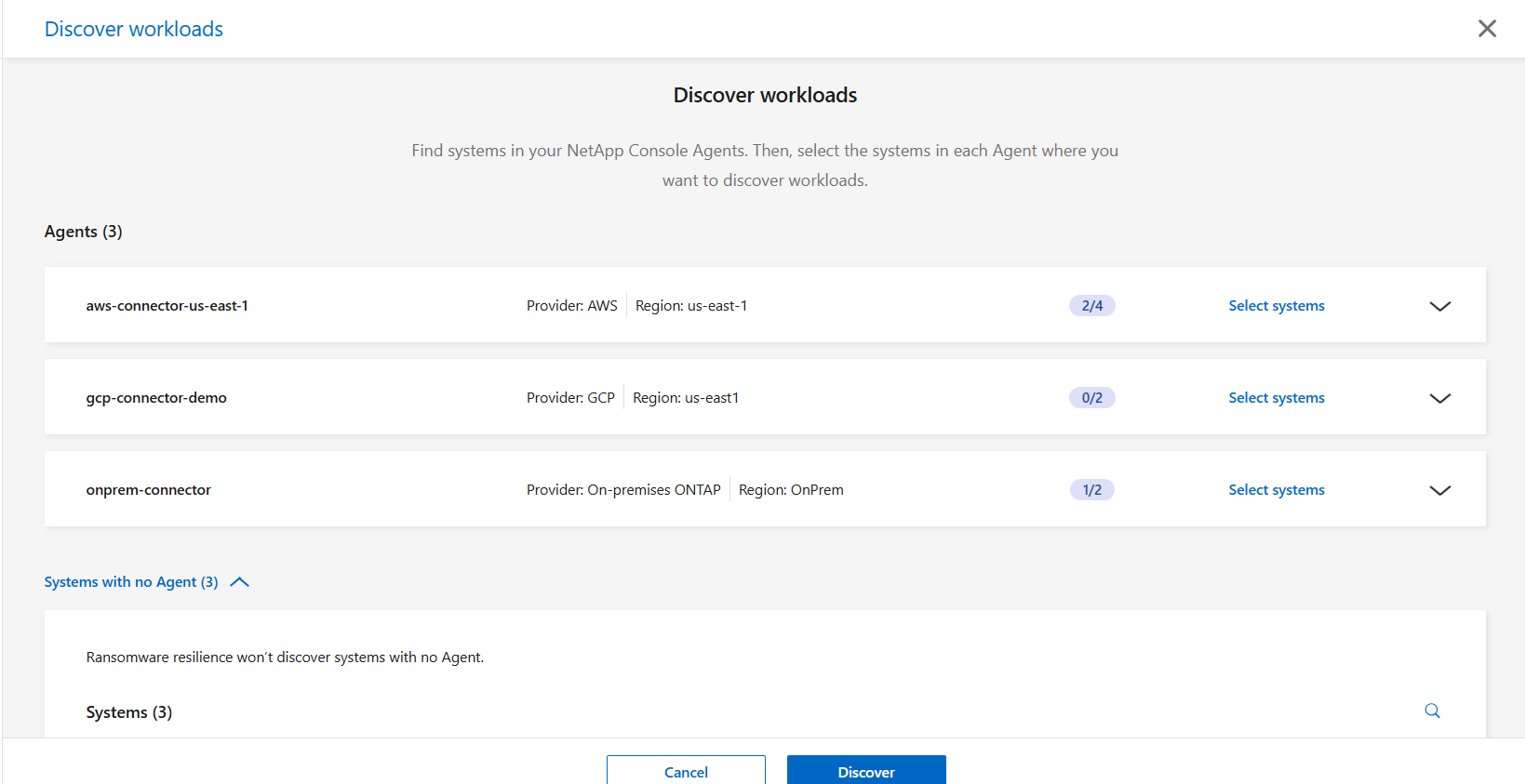
Within each Console agent, select the systems where you want to discover workloads.
Discovering workloads does not automatically protect them. Ransomware Resilience recognizes existing protection policies from NetApp Backup and Recovery or ONTAP in the discovery process. Any workloads that don't have protection require you to configure protection.
|
|
Ransomware Resilience can only discover up to 3,000 workloads per Console agent. |
-
From the NetApp Console, select Protection > Ransomware Resilience.
If this is your first login, the landing page appears. To start with the free trial, select Start 30-day free trial. If you've already enabled the trial, select Start by discovering workloads.
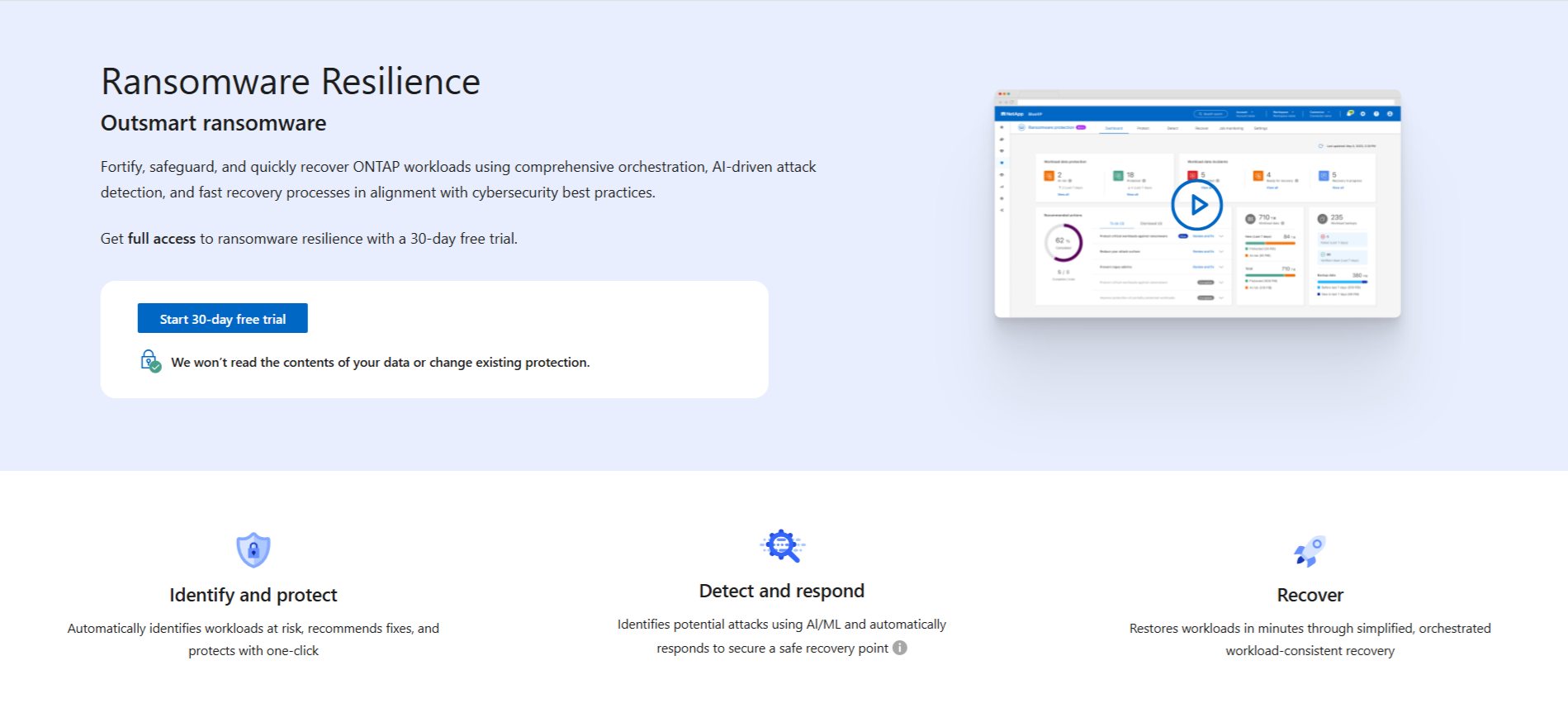
Ransomware Resilience finds both supported and unsupported systems. This process might take a few minutes.
-
To discover systems for a specific Console agent, choose the down arrow for the Console agent that contains the system you want to discover.
-
Select the systems you want to perform discovery on.
-
Select Discover.
Ransomware Resilience discovers workload data only for the systems you select. The discovery process can take several minutes.
-
To download the list of discovered workloads, select Download results.
-
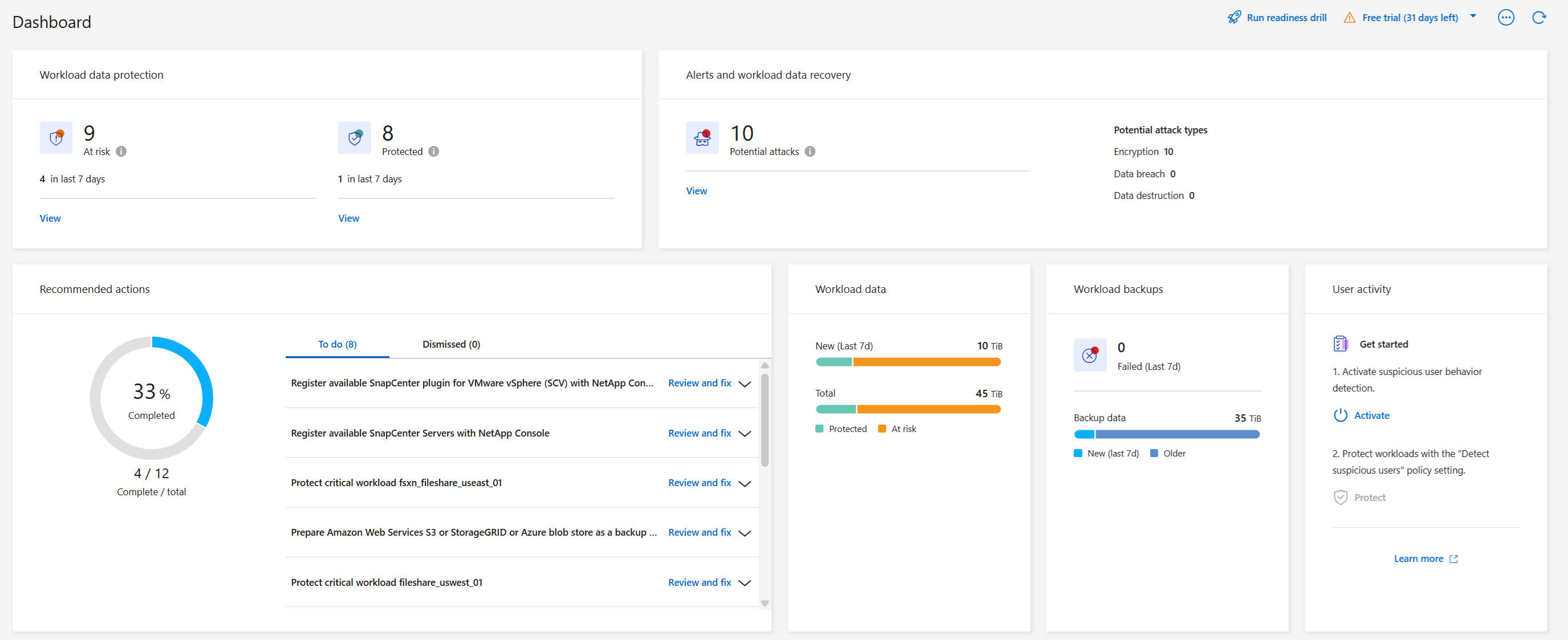
To display the Ransomware Resilience dashboard, select Go to Dashboard.
The dashboard shows data protection health. The number of at-risk or protected workloads updates as new workloads are discovered.
Discover newly created workloads for previously selected systems
If you've added workloads to a previously discovered system, rerun discovery to identify and protect the new workloads.
-
To identify the time of the last discovery, look at the date and time stamp next to Refresh icon at the top right of the Ransomware Resilience dashboard.
-
From the dashboard, select the Refresh icon to identify new workloads.

|
If you find there are volumes not displaying for the system you've discovered, the volumes might be unsupported. To find a list of unsupported volumes, go to the Settings menu then select the action menu in the Workload discovery card to download a JSON report of supported and unsupported volumes. |
Discover new systems
If you've already performed discovery on a system and later added a workload, perform discovery again to identify it.
-
From Ransomware Resilience, select Settings.
-
In the Workload discovery card, select Discover. Discovery can take a few minutes. A loading icon displays the progress.
-
Ransomware Resilience discovers both supported and unsupported systems. It does not support a system if its ONTAP version is below the required version. When you hover over an unsupported system, a tooltip displays the reason. Select the systems where you want to identify workloads.
-
Select Discover.
Exclude workloads
Ransomware Resilience allows you to exclude specific workloads in a system from ransomware protection and detection.
You can only exclude workloads that are supported and have been discovered successfully. You can modify the list of excluded workloads at any time. You aren't billed for workloads excluded from Ransomware Resilience.
-
In Ransomware Resilience, select Settings.
-
In the Settings dashboard, locate the Workload discovery dashboard. The card identifies the number of excluded workloads. To add workloads, next to the excluded workloads, select Manage.
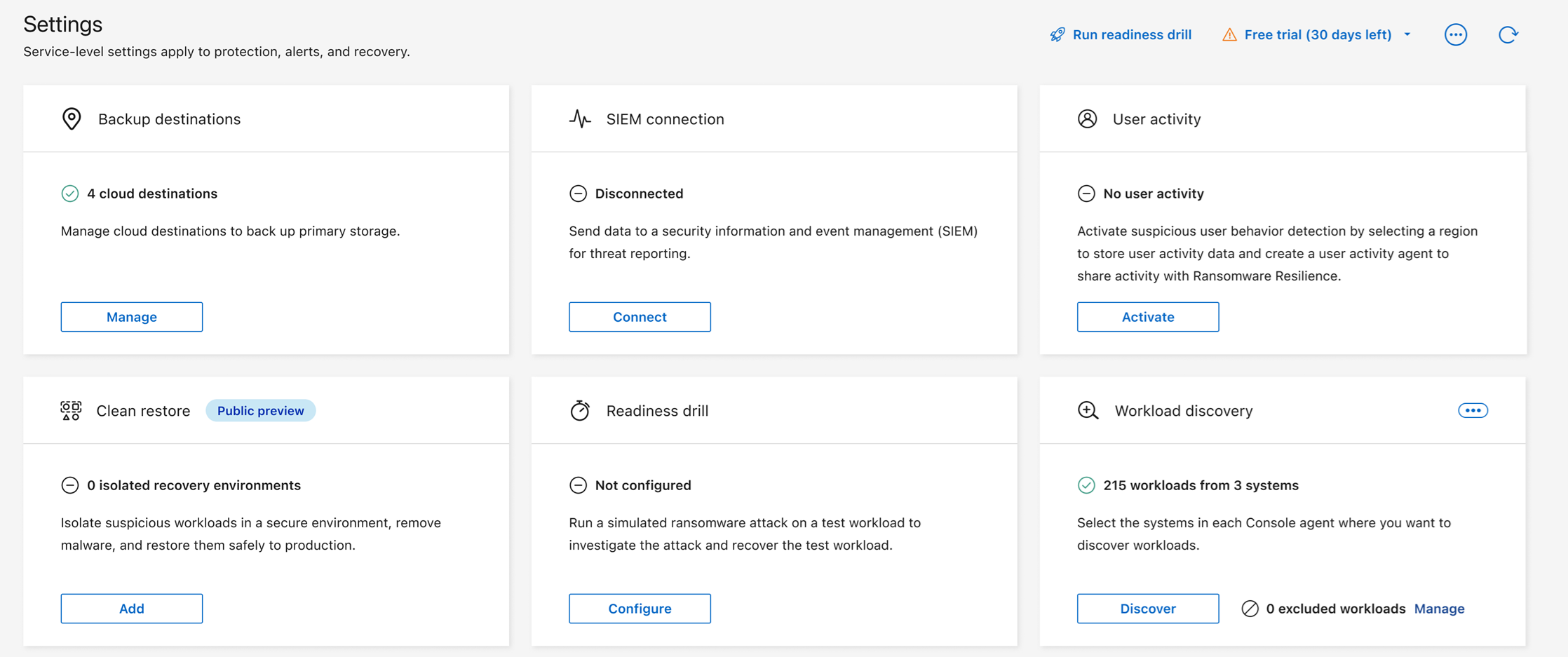
-
In the Excluded workloads page, select Add.
-
Select the workloads you want to exclude then Add.
-
Review the excluded workloads in the Excluded workloads page. While the workload is being added, a progress indicator displays next to its name. If a workload was not excluded successfully, it doesn't display on the page.
-
In Ransomware Resilience, select Settings.
-
In the Settings dashboard, locate the Workload discovery dashboard. The card identifies the number of excluded workloads. Next to the excluded workloads, select Manage.
-
To remove an individual workload, select the action menu for the workload you want to remove from the excluded list.
To remove multiple workloads, select the checkbox next to the workloads you want to remove then Remove from excluded.
-
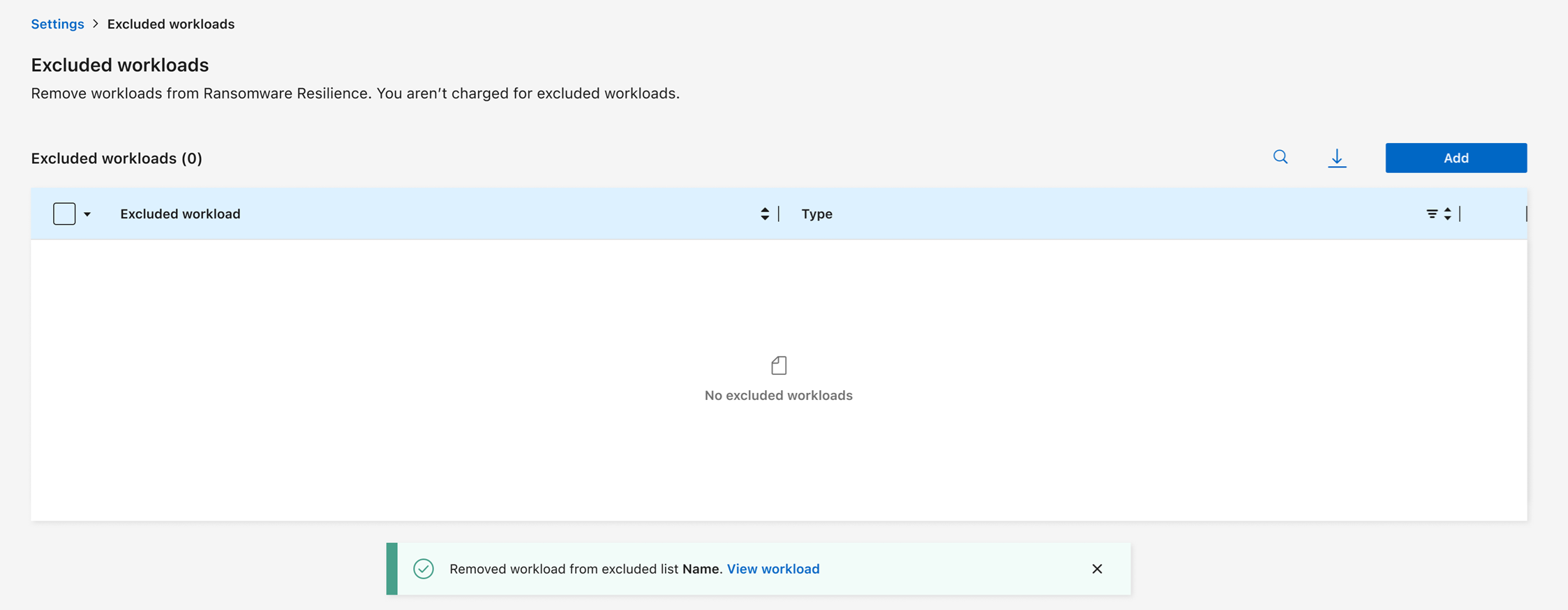
In the dialog, select Remove to confirm that you want to remove the workloads from the exclude list.
-
If the workload is removed from the excluded workload list successfully, a success message appears on the Excluded workload page and the workload no longer appears in the list of excluded workloads. If the action fails, an error message appears; attempt the operation again.